



Send Message
Privacy statement: Your privacy is very important to Us. Our company promises not to disclose your personal information to any external company with out your explicit permission.


An outdoor portable gas pizza oven is a specialized cooking appliance designed to replicate the high-heat environment of traditional brick ovens using propane or natural gas fuel sources. Unlike indoor countertop models, these units are engineered for outdoor mobility and rapid heat-up capabilities, allowing professional chefs and home cooks to achieve authentic Neapolitan-style crusts in minutes.
The core mechanism relies on a dual-zone heating system that directs intense thermal energy toward the cooking surface while maintaining manageable exterior temperatures for safety. By utilizing gas combustion rather than electric coils or charcoal briquettes, these ovens eliminate the need for extended preheating times—often reaching optimal baking temperatures of 900°F (480°C) within 15 to 20 minutes.
For commercial operators and serious enthusiasts, the value proposition centers on consistency and throughput. A reliable portable unit delivers uniform heat distribution across stone or steel surfaces, ensuring that every pie—from thin-crust Roman styles to thick-dough Chicago variants—cooks evenly without hot spots or undercooked centers.
As a dedicated OEM and ODM manufacturer based in Ningbo, China, we provide end-to-end production capabilities for outdoor portable gas pizza ovens that prioritize durability, thermal efficiency, and operational reliability. Our vertically integrated facility handles every stage of fabrication—including laser cutting, precision bending, automated welding, powder coating, and final assembly—ensuring strict quality control at each step.
Vertical integration reduces your procurement risk. Because all manufacturing processes occur under one roof, we maintain tighter tolerances on critical components such as burners, heat shields, and insulation layers. This control translates directly into fewer field failures, lower warranty claims, and consistent performance across large production runs.
Our engineering team specializes in designing portable configurations that balance weight constraints with structural integrity. Whether you require foldable legs, integrated cart systems, or compact storage footprints, our R&D capability supports custom specifications tailored to your target market's logistical requirements.
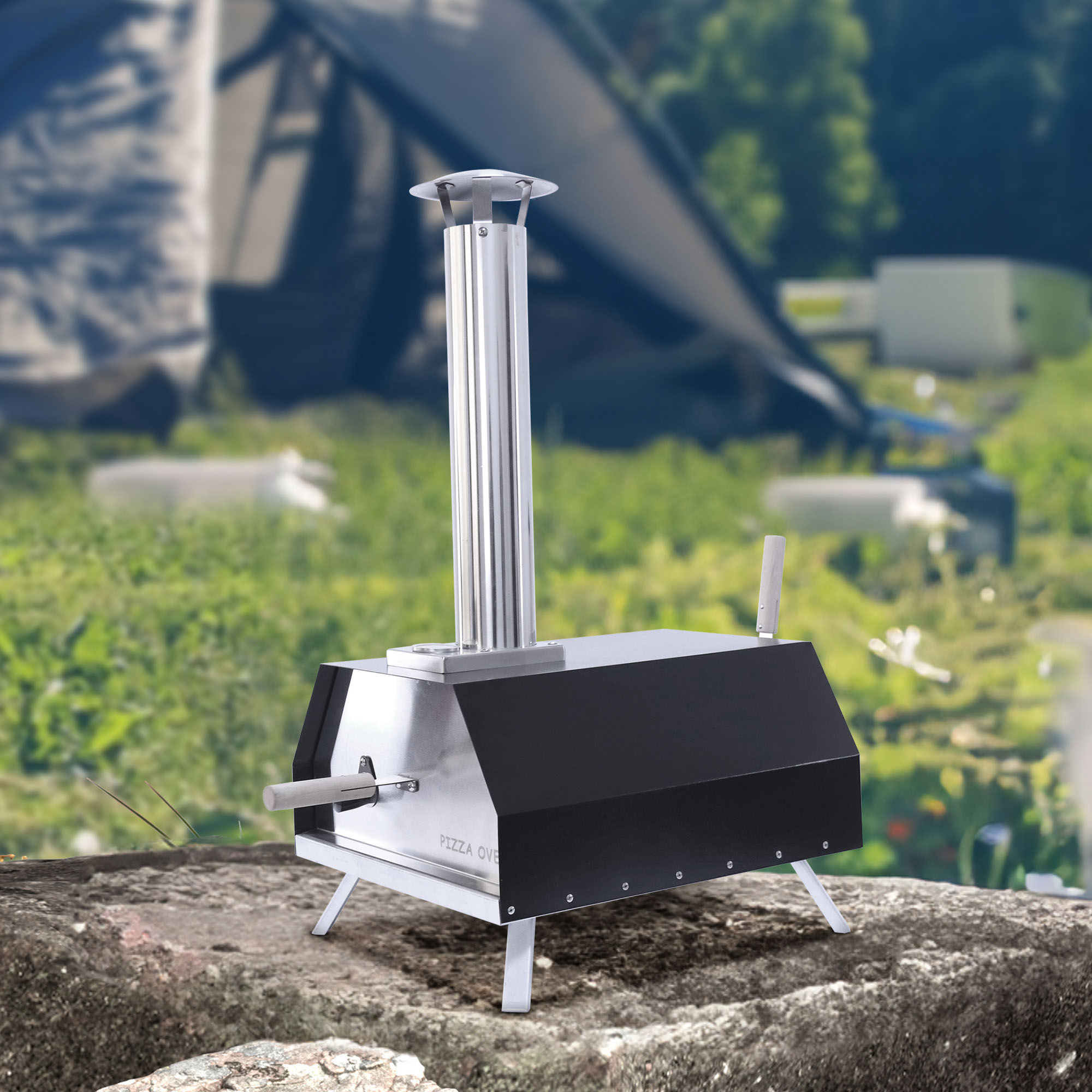
We utilize grade-grade stainless steel (typically 304 or 430 series) for exterior panels and internal chambers, selected specifically for its resistance to high-temperature oxidation and corrosion. Each material batch undergoes incoming inspection to verify thickness, finish quality, and chemical composition before entering production.
Every completed oven undergoes rigorous thermal cycling tests to validate temperature recovery rates, heat retention capabilities, and burner stability under continuous operation. We measure uniformity across the cooking surface to ensure no cold zones compromise product quality during service.
Gas-powered appliances require stringent safety protocols. All units are evaluated for gas leak integrity, flame failure device responsiveness, tip-over protection mechanisms, and adequate ventilation clearance. Our manufacturing process incorporates fail-safe design principles to meet international safety expectations.
Exterior finishes receive multi-stage surface preparation followed by electrostatic powder coating applied in a controlled environment. This process ensures uniform adhesion, scratch resistance, and color consistency—critical for maintaining brand appearance in competitive retail markets.
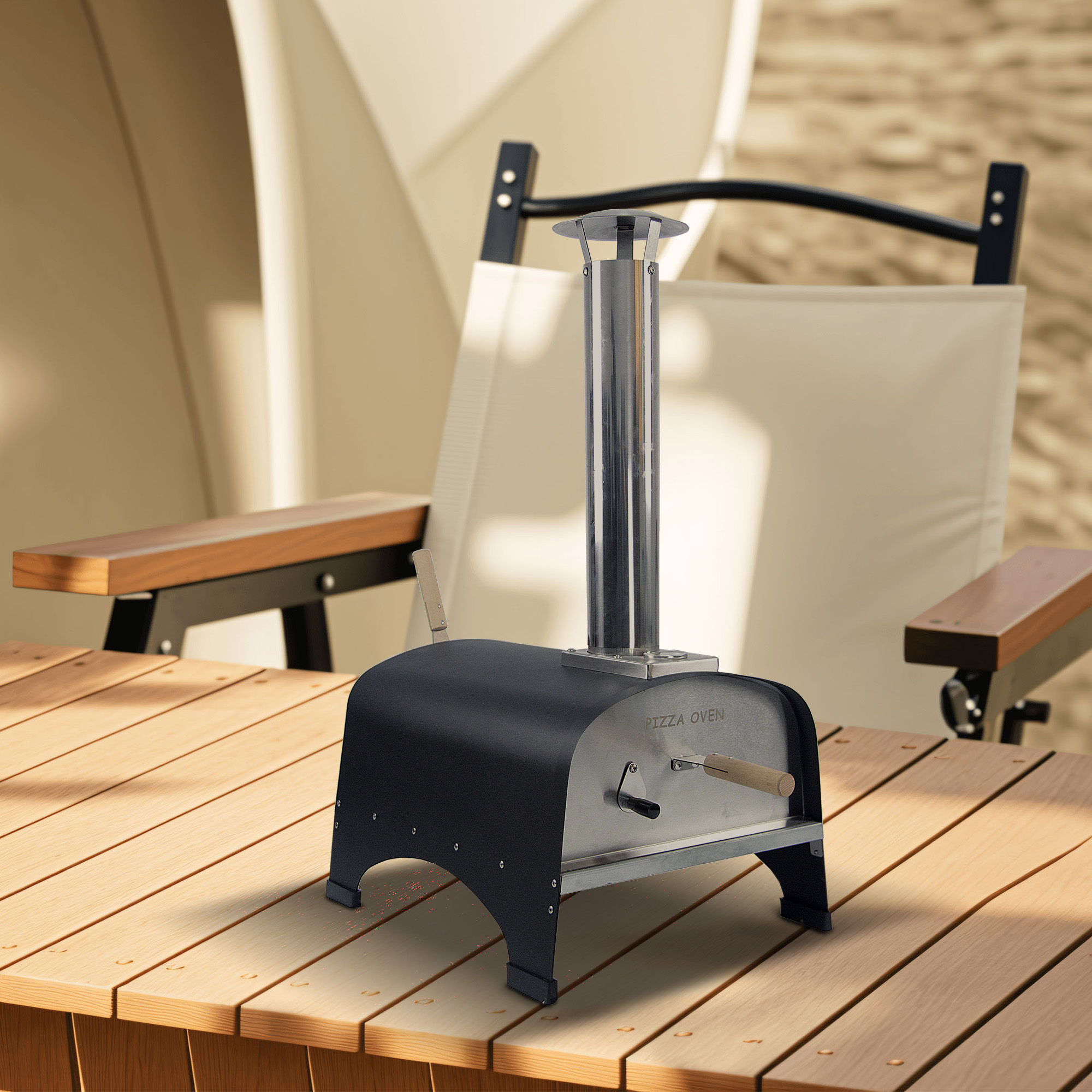
Selecting the correct supplier for portable gas pizza oven OEM manufacturing requires evaluating more than just unit pricing. Buyers must assess the supplier's technical depth, production transparency, and ability to support long-term scaling.
Key evaluation criteria include:
Prioritize partners who treat your product development as a collaborative engineering effort rather than a transactional order fulfillment relationship.
Verify BTU output per burner zone and confirm recovery time after door opening. High-output units (15,000+ BTU) maintain temperature stability during peak service periods.
Assess wheel configuration, handle ergonomics, disassembly requirements, and packed dimensions. Ensure the design supports easy transport without compromising structural rigidity during use.
Confirm compatibility with standard propane tanks or natural gas hookups. Check regulator type, hose length, and connection fittings to match regional standards.
Choose between cordierite pizza stones for moisture absorption or stainless steel plates for even conduction. Stone offers authentic crust texture; steel provides easier cleanup.
Double-wall construction with mineral wool or ceramic fiber insulation improves heat retention, reduces exterior surface temperature, and lowers fuel consumption during extended use.
Evaluate spare parts availability, warranty terms, technical documentation quality, and response time for engineering inquiries. Strong post-sale support reduces total cost of ownership.
Seek suppliers with complete in-house production lines covering metal fabrication through final assembly. Integrated operations enable faster iteration cycles, better defect tracking, and more competitive pricing structures compared to trading companies.
Prioritize manufacturers with proven export history to your target region. Familiarity with European, American, Australian, or Asian market requirements ensures compliance with local safety standards and consumer expectations.
Choose partners offering both white-label solutions and fully custom development. Flexibility allows you to start with established designs while gradually introducing proprietary features that differentiate your brand.
Direct access to engineers—not just sales representatives—accelerates problem resolution and innovation. A responsive technical team can address design tweaks, material substitutions, and regulatory questions efficiently.
Compact footprint and rapid heat-up make these ovens ideal for mobile food operations where space is limited and speed is essential for customer throughput.
Outdoor dining extensions benefit from professional-grade pizza production without requiring permanent kitchen infrastructure or gas line installation.
Event caterers leverage portability to serve fresh-baked pizza at weddings, corporate gatherings, and festivals, creating memorable guest experiences.
Homeowners seeking premium outdoor cooking experiences appreciate the convenience of gas ignition combined with artisanal pizza results previously only available at specialty restaurants.
Culinary schools use portable units for hands-on instruction in dough stretching, sauce application, and high-heat baking techniques without committing to fixed installations.
Production crews requiring realistic cooking scenes benefit from the visual authenticity and quick setup capabilities of portable gas ovens on location shoots.
Problem: Uneven baking results in some pizzas being overcooked while others remain underdone, damaging brand reputation.
Solution: Specify ovens with properly spaced burner arrays and reflective interior surfaces. Request thermal imaging test reports from your supplier to verify uniformity before placing bulk orders.
Problem: Low-quality stainless steel or inadequate powder coating leads to cosmetic degradation and structural weakness over time.
Solution: Require 304-grade stainless steel for exposed surfaces and verify powder coating thickness exceeds 60 microns. Conduct salt spray testing on sample units to confirm corrosion resistance.
Problem: Safety-critical component failures pose serious hazard risks and can result in product recalls.
Solution: Source suppliers who implement certified flame failure devices and conduct 100% gas integrity testing on every unit. Verify that regulators and hoses carry relevant safety certifications for your destination market.
Problem: Over-engineered or poorly balanced designs make units difficult to transport, limiting market appeal.
Solution: Work with engineering teams to optimize material gauge and structural layout. Specify lightweight yet durable materials and ergonomic transport features such as reinforced wheels and balanced handles.
Problem: Inefficient production scheduling or supply chain bottlenecks prevent timely delivery, missing seasonal demand windows.
Solution: Partner with manufacturers who maintain raw material inventory and have demonstrated on-time delivery records. Establish clear production timelines with milestone checkpoints throughout the manufacturing process.
Privacy statement: Your privacy is very important to Us. Our company promises not to disclose your personal information to any external company with out your explicit permission.
Fill in more information so that we can get in touch with you faster
Privacy statement: Your privacy is very important to Us. Our company promises not to disclose your personal information to any external company with out your explicit permission.