



Send Message
Privacy statement: Your privacy is very important to Us. Our company promises not to disclose your personal information to any external company with out your explicit permission.


An electric pellet grill is a versatile outdoor cooking appliance that combines the smoky flavor of traditional wood-fired grilling with the precise temperature control of digital electronics. Unlike charcoal or gas grills, these units use compressed sawdust pellets as fuel, fed automatically into a fire pot by an internal auger system.
For B2B buyers and distributors, electric pellet grills represent a high-growth segment in the outdoor living market. They appeal to consumers seeking convenience without compromising on authentic BBQ taste. Key features include digital controllers for set-and-forget cooking, smoke settings for flavor intensity, and wide temperature ranges suitable for smoking, baking, roasting, and grilling.
The core components typically include a hopper for pellet storage, an auger motor for fuel delivery, a heat deflector, and an electronic control board. Understanding these elements helps procurement teams evaluate product quality and identify potential sourcing advantages.
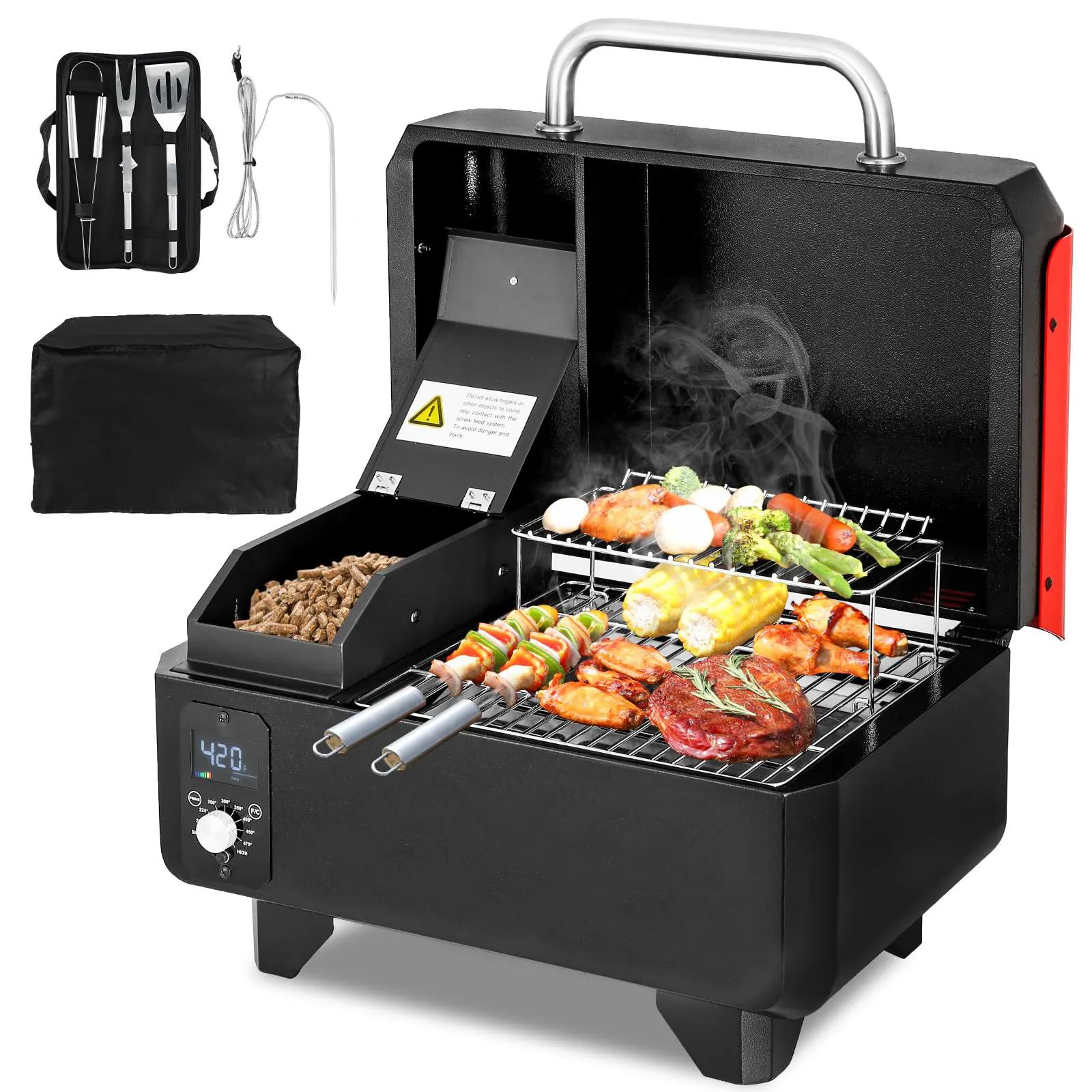
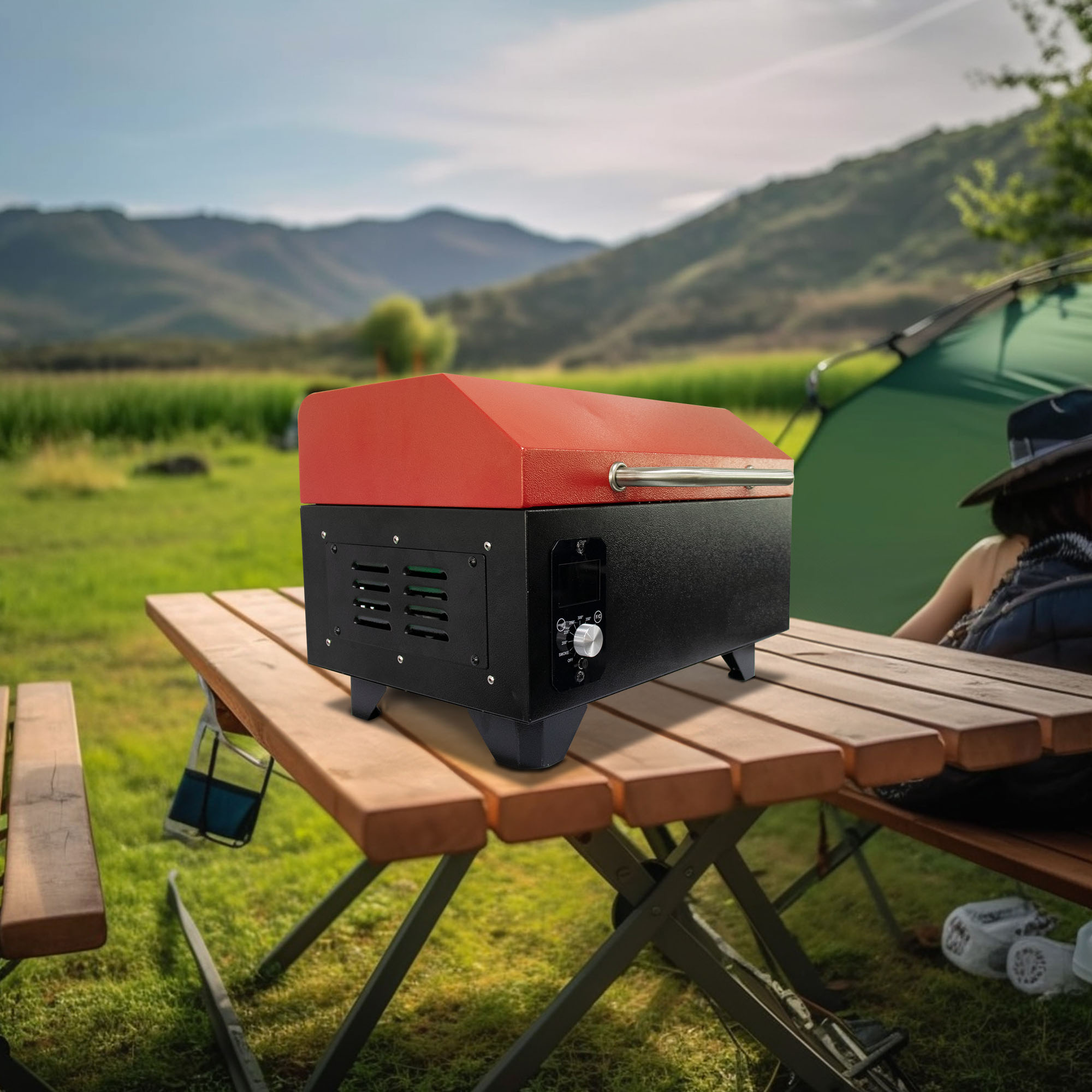
Ningbo Yinzhou Weinuo Machinery Manufacturing Co., Ltd. operates a fully integrated production line for pellet grills and related outdoor cooking equipment. Located in Ningbo, China, our facility handles almost all manufacturing processes in-house, ensuring strict quality control from raw material to finished product.
Our comprehensive capabilities include:
This vertical integration model reduces lead times, minimizes supply chain risks, and allows us to maintain competitive pricing for bulk orders. Our products are widely distributed across Europe, America, Australia, and Asia markets.
Selecting the correct electric pellet grill requires evaluating multiple factors beyond price. For procurement professionals, understanding these specifications ensures you source products that meet end-user expectations and regulatory requirements in target markets.
Grill sizes range from compact models (300–400 sq in) ideal for small families, to large commercial-grade units (600+ sq in). Consider your target demographic's household size and usage patterns. Larger grills command higher prices but serve professional and entertainment-focused buyers.
Look for digital controllers with PID (Proportional Integral Derivative) technology for precise temperature management. A range of 180°F to 500°F covers most cooking applications. Check if the unit offers dedicated smoke modes for low-and-slow barbecue techniques.
Premium pellet grills feature powder-coated steel bodies, stainless steel cook chambers, and cast iron grates. Verify that the hopper is food-grade and that electrical components carry appropriate safety certifications for your export destination.
Hoppers typically hold 15–25 lbs of pellets. Larger capacities mean longer unattended cooking sessions but increase overall shipping volume. Balance capacity against logistics costs when selecting SKUs for your inventory.
Partner with manufacturers offering responsive after-sales support, readily available spare parts, and clear warranty terms. Strong supplier relationships reduce returns and build long-term customer loyalty in your market.
Ensure all electrical components meet regional standards such as UL/ETL for North America, CE for Europe, and SAA for Australia. Request test reports and certification documentation before placing orders.
Use this structured checklist to evaluate potential suppliers and ensure every critical factor is addressed before committing to a purchase order. This framework helps streamline your procurement workflow and reduce risk.
Electric pellet grills serve diverse applications across residential, commercial, and institutional sectors. Understanding these use cases helps you identify the right product configurations for different buyer segments and expand your addressable market.
Homeowners use pellet grills for backyard barbecues, weekend family gatherings, and seasonal entertaining. The set-and-forget convenience appeals to busy professionals who want restaurant-quality results at home. Compact models fit patios and balconies.
Commercial kitchens incorporate pellet grills for menu differentiation, offering smoked burgers, ribs, and vegetables. Consistent temperature control ensures repeatable results during high-volume service periods. Many restaurants highlight pellet-smoked items as premium offerings.
Mobile catering businesses rely on portable pellet grills for weddings, corporate events, and food festivals. Quick startup times and reliable performance make them ideal for off-site cooking operations where power access is available.
Compact electric pellet grills fit within limited food truck kitchens, enabling vendors to offer smoked meats alongside traditional fast food options. Low maintenance requirements reduce downtime during busy service days.
Recreational facilities provide pellet grills as amenities for guests, replacing open-flame charcoal grills that may pose fire hazards. Electric operation eliminates the need for propane tanks or charcoal deliveries.
Office campuses, universities, and government facilities use pellet grills for employee appreciation events and outdoor dining areas. Durable construction withstands heavy public use while maintaining consistent cooking performance.
Procurement professionals frequently encounter challenges when sourcing electric pellet grills. Recognizing these common pitfalls early allows you to mitigate risks and negotiate better terms with suppliers.
Low-cost controllers may lack PID algorithms, causing temperature fluctuations that ruin delicate smoking sessions. Always request sample units for testing before committing to large orders. Specify minimum tolerance levels (±10°F) in your technical requirements.
Poorly designed auger systems can jam when using moisture-absorbed pellets or oversized pellet diameters. Verify that the auger motor has sufficient torque ratings and that the feed mechanism includes anti-jam protection features.
Inadequate powder coating or thin-gauge steel leads to rust formation, especially in coastal or humid climates. Require salt spray test reports and verify coating thickness specifications (minimum 60 microns) in your purchase agreements.
Missing or invalid certifications create customs clearance delays and liability exposure. Confirm that all electrical components carry recognized third-party testing marks for your target market before shipment approval.
Suppliers who cannot guarantee spare parts availability create long-term service challenges. Negotiate spare parts inclusion with initial orders and establish ongoing supply agreements for controllers, motors, and thermocouples.
Pellet grills are heavy and contain fragile electronic components. Insist on reinforced carton packaging with foam inserts and corner protectors. Conduct drop tests on pre-production samples to validate packaging integrity.
When selecting a manufacturing partner for electric pellet grills, prioritize suppliers with integrated production capabilities, proven export experience, and flexible OEM/ODM services. Here is the profile of an ideal supplier based on industry best practices.
Full-Line Manufacturing: In-house laser cutting, bending, welding, powder coating, and assembly ensure complete quality oversight from raw materials to finished goods.
Global Market Experience: Products distributed across Europe, America, Australia, and Asia demonstrate familiarity with international standards and buyer expectations.
ODM & OEM Flexibility: Custom design capabilities allow brand owners to differentiate their offerings with proprietary features, colors, and configurations.
Competitive Pricing: Vertical integration eliminates middlemen margins, providing cost advantages for both standard and customized product lines.
Be cautious of suppliers who outsource critical processes, lack transparent pricing structures, cannot provide sample units for evaluation, or have limited export documentation capabilities. These factors significantly increase procurement risk.
These answers address the most common questions from B2B buyers, distributors, and procurement professionals sourcing electric pellet grills for their markets.
Standard production lead times range from 30 to 45 days for confirmed orders, depending on order quantity and customization level. Manufacturers with full production lines like Ningbo Weinuo can often deliver faster due to streamlined internal processes. Rush orders may be available at a premium.
Yes, most reputable manufacturers offer full OEM and ODM services. You can customize colors, logos, control panel designs, hopper shapes, and even internal component configurations. Minimum order quantities apply for custom runs, typically ranging from 100 to 500 units depending on the extent of customization.
Electric pellet grills are compatible with standard 6mm diameter wood pellets made from hardwoods like hickory, mesquite, apple, cherry, and maple. Premium-grade pellets with low moisture content (below 10%) produce cleaner combustion and better flavor. Some manufacturers recommend specific pellet brands for optimal auger performance.
Yes, electric pellet grills require a standard electrical outlet (110V–120V in North America, 220V–240V in Europe) to power the digital controller, auger motor, and ignition system. They do not use electricity for heat generation—pellets provide the fuel—but the electronic components are essential for automated operation.
Standard manufacturer warranties range from 1 to 3 years covering defects in materials and workmanship. Most suppliers include spare parts kits with initial orders and provide technical support for troubleshooting. Extended warranty options may be available for larger volume purchases.
Electrical components must carry relevant safety certifications: UL/ETL for North America, CE for Europe, SAA for Australia, and CCC for China. Additionally, food-contact surfaces should comply with FDA or EU food safety regulations. Your supplier should provide test reports and certificates for each product model.
Many manufacturers accommodate trial orders of 50–100 units to help buyers evaluate product quality, packaging, and market response before scaling up. While per-unit pricing may be slightly higher for smaller quantities, this approach reduces financial risk and builds confidence in the supplier relationship.
Privacy statement: Your privacy is very important to Us. Our company promises not to disclose your personal information to any external company with out your explicit permission.
Fill in more information so that we can get in touch with you faster
Privacy statement: Your privacy is very important to Us. Our company promises not to disclose your personal information to any external company with out your explicit permission.