



Send Message
Privacy statement: Your privacy is very important to Us. Our company promises not to disclose your personal information to any external company with out your explicit permission.


A portable BBQ grill is a compact, lightweight cooking appliance designed for outdoor dining on the move. Unlike stationary backyard grills, these units are engineered for easy transport to campgrounds, beaches, parks, and tailgating events. They provide the authentic smoky flavor of charcoal or wood-fired cooking in a package that fits in your car trunk.
For professional buyers and distributors, portable BBQ grills represent a high-growth segment in the outdoor living market. The demand is driven by urbanization—where people have smaller balconies—and the post-pandemic surge in camping and road trips. A well-designed portable grill must balance durability with weight, ensuring it withstands rough handling while remaining user-friendly.
Fits easily in vehicles
Weather-resistant materials
Charcoal, gas, or electric
Ningbo Yinzhou Weinuo Machinery Manufacturing Co., Ltd. specializes in OEM and ODM solutions for portable BBQ grills and related outdoor cooking equipment. With a fully integrated production line in Ningbo, China, we control every step from laser cutting to final assembly. This vertical integration allows us to offer competitive pricing without compromising quality.
Our factory handles laser cutting, bending, welding, powder coating, and assembling in-house. This means faster turnaround times, consistent quality control, and the ability to customize designs for your brand. Whether you need a folding kettle grill or a heavy-duty cart-style unit, our engineering team can develop it.
We serve markets across Europe, America, Australia, and Asia. Our products are designed to meet international safety and performance standards, making them ideal for distributors looking to expand their catalog with reliable, export-ready goods.
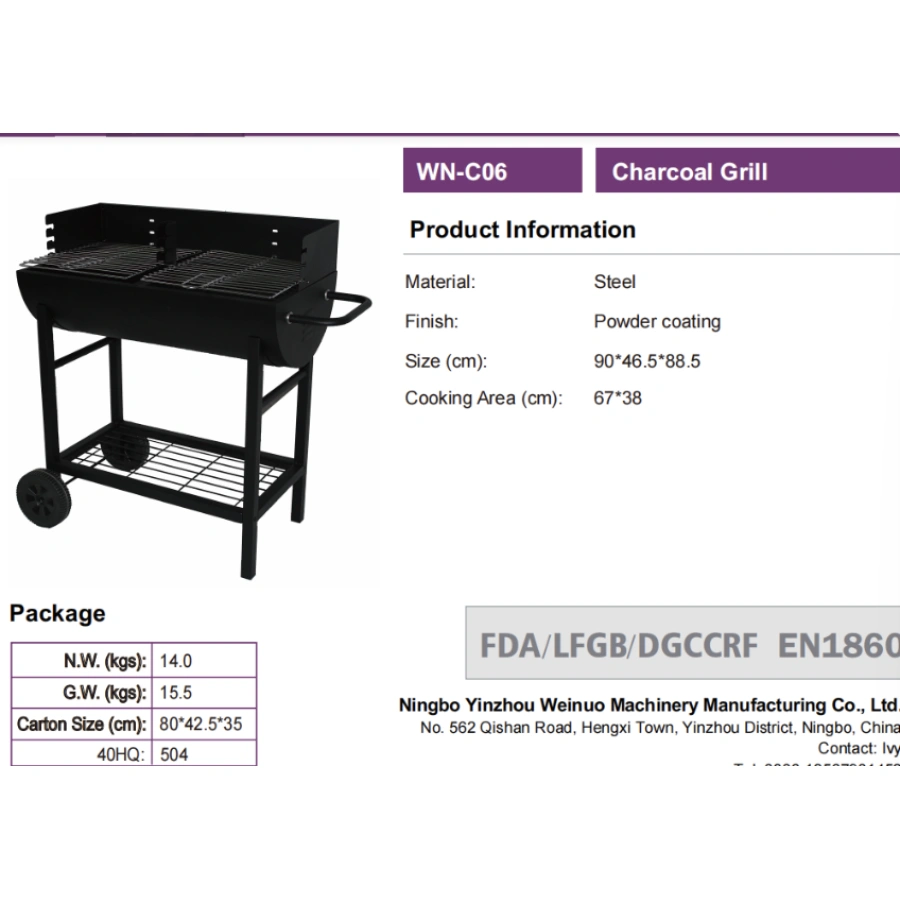
Quality is the primary concern for B2B buyers sourcing portable BBQ grills. A defective grill leads to returns, negative reviews, and brand damage. Our manufacturing process ensures that every unit meets rigorous durability and safety benchmarks.
We use high-grade steel and heat-resistant alloys for grates and bodies. Powder coating prevents rust and chipping, ensuring longevity even in humid coastal environments.
All structural welds are inspected for strength and smoothness. Reinforced joints prevent wobbling during transport and use, critical for foldable designs.
Airflow vents and chimney designs are optimized for fuel efficiency. Buyers benefit from products that burn cleaner and longer, reducing customer complaints.
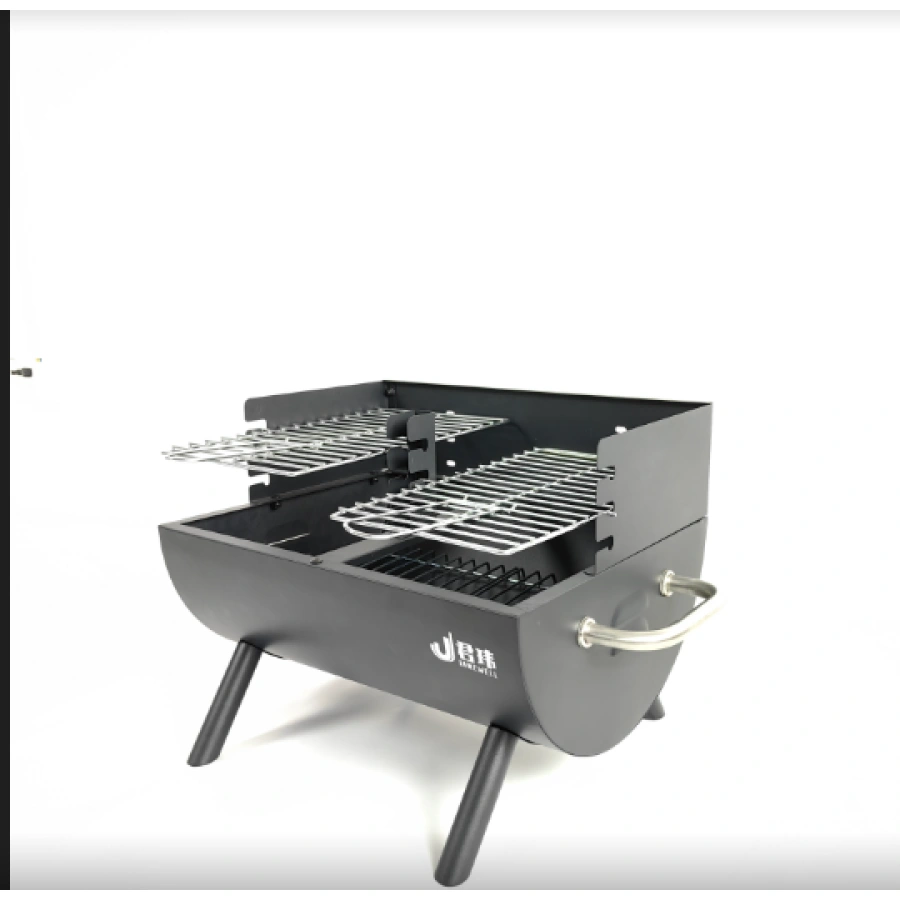
Selecting a manufacturer for portable BBQ grills requires evaluating more than just price. You need a partner who understands global compliance, logistics, and product innovation.
Ensure the supplier has the machinery and labor force to handle your order volume. A fully integrated factory like ours can scale production quickly during peak seasons.
Can they modify dimensions, colors, or packaging? Look for an ODM/OEM partner who offers flexible design services to match your brand identity.
Ask about pre-shipment inspections, material certifications, and testing protocols. Reliable suppliers provide transparent QC reports.
Portability isn't just about the product—it's about shipping efficiency. Suppliers who optimize packaging for container load capacity help you reduce landed costs.
Use this checklist when evaluating potential suppliers or reviewing new portable BBQ grill models for your inventory. Each point addresses a critical factor in procurement success.
Check for rust-proof coatings and reinforced handles. Ensure the grill survives drops and weather exposure.
Test the folding hinges for smooth operation and secure locking. Poor mechanisms lead to product failures.
Verify cooking capacity matches target demographics. Compact for solo campers, larger for families.
Optimized packaging reduces shipping costs per unit. Ask suppliers for carton dimensions and weights.
Ensure compliance with local fire safety and material regulations in your target market.
Consistent delivery schedules prevent stockouts during peak grilling season.
Sourcing portable BBQ grills internationally comes with specific challenges. Understanding these common pitfalls helps you negotiate better terms and avoid costly mistakes.
Low-quality grills often use thin steel with inadequate coating. When exposed to moisture, they rust quickly, leading to customer complaints. Always request material specifications and salt-spray test results from your supplier.
Many portable grills wobble during use due to weak hinge mechanisms. This creates safety hazards and negative reviews. Inspect prototypes thoroughly for stability under load before placing bulk orders.
Poor airflow design results in hot spots and uneven cooking. This affects food quality and brand reputation. Work with manufacturers who conduct thermal testing and optimize vent placement.
Bulkier grills consume valuable container space, increasing freight costs per unit. Prioritize collapsible or disassembled designs that pack flat to maximize container utilization and lower landed costs.
Portable BBQ grills serve diverse market segments beyond traditional backyard barbecues. Their versatility drives demand across multiple industries and use cases.
The largest application segment. Campers need lightweight, easy-to-clean grills that fit in vehicle trunks. Compact charcoal and wood pellet options dominate this category.
Fans gather hours before games to cook. Durable, fast-heating grills with stable legs are essential for parking lot cooking. Gas-powered options are increasingly popular for quick setup.
Mobile living spaces require space-saving solutions. Foldable grills with secure latching mechanisms are ideal for RV travelers who want gourmet meals on the road.
Sand and salt air accelerate corrosion. Grills with stainless steel components and protective coatings perform best in beach environments.
City dwellers with limited space seek compact, low-smoke grilling options. Electric and small charcoal grills with smokeless technology are gaining traction.
Food trucks and event caterers use portable grills for on-site cooking demonstrations and mobile food service operations requiring reliable equipment.
When selecting a manufacturing partner for portable BBQ grills, consider these key recommendations to ensure a successful supply chain relationship.
Suppliers with in-house production—from metal fabrication to finishing—offer better cost control, quality assurance, and flexibility. Avoid trading companies that add unnecessary markup and communication layers.
Always evaluate physical samples for build quality, finish consistency, and portability features. Test the grill under real-world conditions to identify potential issues early.
Start with manageable minimum order quantities to test market response. Reputable manufacturers like Weinuo Machinery are often willing to work with reasonable MOQs for new product launches.
Choose suppliers with responsive English-speaking teams who understand international trade requirements. Clear communication prevents errors in specifications, packaging, and labeling.
Standard lead times range from 30 to 45 days for OEM orders, depending on complexity and quantity. ODM products with minor modifications may ship faster. Rush orders are often available at a premium.
Yes. Most manufacturers offer full OEM/ODM services including custom colors, logo engraving, unique folding mechanisms, and branded packaging. Discuss your requirements with the engineering team early in the process.
High-carbon steel with heat-resistant powder coating is standard for bodies. Stainless steel or porcelain-coated grates provide superior durability. Chrome-plated wire grates are a budget-friendly alternative.
Collapsible designs maximize container utilization. A standard 40HQ container can hold significantly more units when grills are packed flat. Request packing lists and carton dimensions from your supplier for accurate calculations.
Requirements vary by destination. The EU may require CE marking and EN standards compliance. The US may need CPC certification for children's products if applicable. Consult your local regulations and ask your supplier for support documentation.
MOQs typically range from 500 to 1000 units per model, but many manufacturers are flexible for first-time buyers or trial orders. Established relationships often lead to reduced MOQ requirements over time.
Privacy statement: Your privacy is very important to Us. Our company promises not to disclose your personal information to any external company with out your explicit permission.
Fill in more information so that we can get in touch with you faster
Privacy statement: Your privacy is very important to Us. Our company promises not to disclose your personal information to any external company with out your explicit permission.